Data stewardship is the practice of assigning people to manage, protect, document, and improve data so it stays accurate, accessible, secure, and useful across its lifecycle. It is part of a larger data governance effort, but it focuses more on the day-to-day work of maintaining data trust.
Every business collects data. The harder part is making sure someone is responsible for what that data means, where it lives, who can use it, and whether it can be trusted. Without stewardship, businesses often deal with duplicate records, unclear definitions, outdated reports, messy metadata, and access confusion.
In the USA, data stewardship matters for companies managing customer data, employee records, research findings, and privacy-sensitive data across many tools. In this article, we will explain what data stewardship means, what a data steward does, how it connects to governance, and which best practices help businesses manage data responsibly.
What does data stewardship mean?
Data stewardship means managing data as a business’s asset throughout its lifecycle. The data lifecycle is the full path data follows from collection and storage to use, sharing, archiving, or deletion.
IBM defines data stewardship as data management practices designed to help ensure high data quality and accessibility. Data stewardship programs usually align with an organization’s data governance policies.
In simple terms, stewardship turns data rules into everyday action. It helps answer questions like:
- What data do we have?
- Where is it stored?
- Who owns it?
- Who can access it?
- What does each field mean?
- Is the data accurate and complete?
- How should it be used?
- When should it be corrected, archived, or removed?
A good data stewardship program makes data easier to find, understand, protect, and use.
Why is data stewardship important?
Data stewardship is important because data loses value when no one is accountable for its quality, meaning, access, or proper use. A report may look polished, but if the underlying data is wrong or poorly defined, the decision built on that report can still fail.
Data stewardship helps companies:
- Improve data quality.
- Reduce duplicate records.
- Standardize definitions.
- Protect sensitive data.
- Track data lineage.
- Support compliance and risk management.
- Make data easier to find and reuse.
- Build trust between business and technical teams.
For example, a sales team may define an “active customer” differently from finance. A data steward helps align that definition, document it, and make sure reports use it consistently.
How are data governance and data stewardship different?
Data governance and data stewardship are closely connected, but they are not the same thing. Data governance sets the rules. Data stewardship applies those rules in daily work.
Data governance defines policies, standards, ownership, decision rights, access rules, and accountability. It answers, “How should data be managed across the organization?”
Data stewardship handles the practical work of managing data quality, definitions, metadata, access coordination, issue resolution, and lifecycle oversight. It answers, “Who makes sure the data is usable and trusted every day?”
A simple way to think about it:
| Area | Data governance | Data stewardship |
|---|---|---|
| Main focus | Rules and accountability | Daily management and execution |
| Scope | Organization-wide | Dataset, domain, or project level |
| Work type | Policy, standards, ownership | Quality checks, documentation, issue resolution |
| People involved | Governance council, leaders, owners | Data stewards, analysts, domain experts |
| Goal | Controlled and trusted data use | Accurate, usable, protected data |
Governance without stewardship often becomes a policy document no one uses. Stewardship without governance can become scattered cleanup work without authority.
What are the main data stewardship responsibilities?
Data stewardship responsibilities include managing data quality, documenting data meaning, coordinating access, protecting sensitive data, and helping businesses use data correctly.
1. Oversee the data lifecycle
A data steward helps track how data is collected, stored, used, shared, updated, and retired. This prevents data from becoming scattered, outdated, or unclear over time.
Lifecycle oversight may include:
- Identifying critical datasets.
- Documenting where data is stored.
- Tracking how data moves between systems.
- Reviewing when data should be archived.
- Making sure old data is not used as current data.
2. Improve data quality
Data stewards help define what good data means for a dataset. They may set quality rules, monitor issues, review duplicates, and work with teams to fix errors.
Data quality work often includes:
- Checking accuracy.
- Reviewing completeness.
- Finding duplicate records.
- Tracking missing values.
- Reviewing anomalies.
- Fixing inconsistent formats.
- Documenting quality requirements.
3. Managing metadata and definitions
Metadata is information that explains data, such as field names, definitions, sources, ownership, update frequency, and usage rules.
A data steward helps make sure people understand what data means. This reduces confusion when different teams use the same terms in different ways.
4. Coordinate data access
Data stewards often help define or support access rules. They may not approve every request alone, but they help make sure access is reasonable, documented, and aligned with policy.
Access work may include:
- Identifying who needs the data.
- Clarifying appropriate use.
- Coordinating with IT or security teams.
- Reducing unnecessary access.
- Supporting privacy and compliance requirements.
5. Protect sensitive data
Data stewardship also includes data privacy and security support. In US businesses, this can matter when handling customer records, employee information, healthcare data, or financial information.
Stewards help classify sensitive data, document usage rules, and make sure teams understand how data should be handled.
What is the difference between a data steward and a data owner?
A data owner is accountable for a dataset. A data steward manages and supports the day-to-day quality, documentation, and proper use of that dataset.
A data owner usually has business authority. They approve rules, access decisions, and priorities for a dataset.
A data steward handles the operational work. They manage definitions, quality issues, metadata, documentation, and coordination between business and technical teams.
Example:
- The VP of Sales may be the owner of CRM customer data.
- A sales operations manager may act as the data steward who reviews duplicates, field definitions, required values, and access questions.
Both roles are important. Ownership gives authority. Stewardship creates practical follow-through.
What are the main types of data stewards?
The main data stewardship roles vary by organization, but most fall into business, technical, domain, project, or governance categories.
- Business data steward: A business data steward understands how data is used by a department or function. They help define terms, quality rules, and practical requirements. A marketing data steward defines customer segmentation fields.
- Technical data steward: A technical data steward understands how data is stored, moved, transformed, and integrated across systems. A data engineer tracks data lineage between a CRM, warehouse, and dashboard.
- Domain data steward: A domain data steward manages data for a specific business area, such as customer, finance, product, employee, or research data. A customer data steward monitors duplicates and missing profile fields.
- Project data steward: A project data steward supports data quality and documentation for a specific initiative. A research project steward defines what counts as a valid survey response.
- Governance data steward: A governance data steward helps apply data policies, standards, and processes across teams. A governance steward helps teams follow access, classification, and privacy rules.
What are data stewardship best practices?
Data stewardship best practices help teams turn responsibility into repeatable habits. Without clear practices, stewardship can become informal cleanup work.
Useful best practices:
- Start with critical data assets: Focus first on datasets used for reporting, compliance, customer programs, or major decisions.
- Define ownership clearly: Every important dataset should have an owner and a steward.
- Document data definitions: Make sure teams agree on terms, fields, rules, and usage.
- Set data quality rules: Define what accurate, complete, valid, and timely data means.
- Track data lineage: Know where data comes from and how it changes.
- Use a data catalog: Make data easier to find, understand, and reuse.
- Create access rules: Limit sensitive data access to people who need it.
- Review issues regularly: Track recurring data problems and fix root causes.
- Train users: Help companies understand data standards, definitions, and responsibilities.
- Measure stewardship progress: Track issue resolution, data quality dimensions, documentation coverage, and access review completion.
A strong stewardship program is practical. It should make data easier to use, not bury teams in process.
How can QuestionPro support data stewardship?
QuestionPro can support data stewardship when companies collect, manage, and reuse survey, feedback, customer experience, employee experience, or research data. In these workflows, stewardship means making sure data is collected clearly, reviewed carefully, organized with context, and used responsibly.
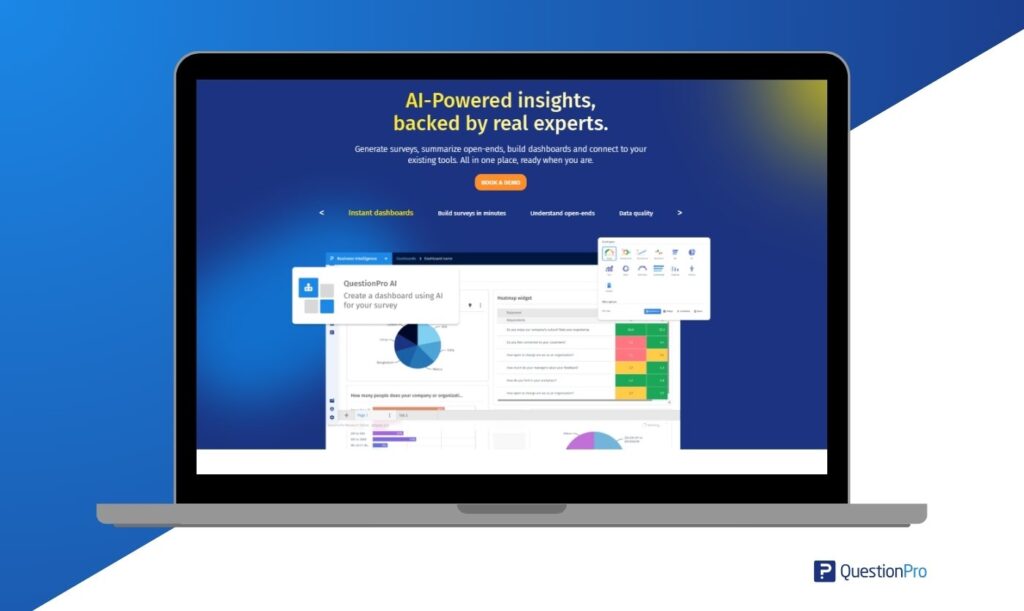
QuestionPro is most relevant to data stewardship in these areas:
- Survey and feedback data quality: Data stewards can use structured question design, validation rules, and response review to reduce incomplete, invalid, or hard-to-use data.
- Research documentation: Businesses can organize study details, findings, reports, and reusable insights so others understand where the data came from and how it should be used.
- Access and reuse: InsightsHub can help companies keep research assets easier to find and reuse while reducing confusion from scattered files or outdated reports.
- Customer and employee feedback governance: Businesses can define how feedback data is collected, reviewed, stored, and shared across departments.
Final takeaway
Data stewardship is the daily work that keeps business data useful, trusted, protected, and understood. It connects governance policies to real tasks like defining data, checking quality, managing metadata, coordinating access, and resolving issues.
The strongest stewardship programs are clear about ownership, practical about responsibilities, and focused on the datasets that matter most. When stewardship works, businesses spend less time arguing about data and more time using it with confidence.
Frequently Asked Questions (FAQs)
A data steward manages day-to-day data quality, definitions, access coordination, documentation, issue resolution, and policy implementation for specific datasets or business domains.
Data governance sets the policies, standards, ownership, and rules for data. Data stewardship applies those rules in daily work through quality checks, documentation, access coordination, and issue management.
Examples include reviewing duplicate CRM records, documenting data definitions, approving access requests, tracking data lineage, fixing data quality issues, and making sure sensitive data follows privacy rules.
Data stewardship is important because data loses value when no one owns its quality, meaning, access, or proper use. Stewardship gives teams accountability for keeping data trusted and usable.