Finding the right employee lifecycle management software can be the difference between an HR team that constantly plays catch-up and one that runs a consistent, scalable people operation.
These platforms manage the full arc of the employee journey, from the moment a candidate applies to the day they leave, and everything in between: onboarding, performance, learning, engagement, and offboarding.
This guide reviews 7 of the best employee lifecycle management tools available in 2026. Each was selected based on feature depth, current G2 and Capterra ratings, pricing transparency, and how well they cover the full employee lifecycle rather than just one stage of it.
What is employee lifecycle management software?
Employee lifecycle management software is a platform that helps organizations manage every stage of an employee’s journey within the company.
It centralizes HR processes across:
- Recruitment and applicant tracking
- Onboarding and orientation
- Performance management
- Learning and development
- Employee engagement
- Compensation and benefits
- Offboarding and exit management
The goal is to replace disconnected HR tools with a single system that gives HR teams visibility across the full employee journey and reduces the manual work of managing people data across multiple platforms.
What does employee lifecycle management software do?
At its core, employee lifecycle management software does three things:
- Centralizes employee data.
All employee information, from hire date to performance history to exit interview notes, lives in one place. HR teams stop hunting across spreadsheets, email threads, and separate tools. - Automates HR workflows.
Onboarding checklists, performance review reminders, benefits enrollment, and offboarding tasks run automatically based on triggers rather than manual follow-up. - Provides analytics across the lifecycle.
Instead of separate reports from separate tools, HR leaders get a single view of engagement trends, retention risk, performance patterns, and headcount data.
The difference between a basic HR tool and a true employee lifecycle management platform is coverage. A payroll tool handles one stage. An ELM platform handles all of them.
Quick comparison: 7 Best employee lifecycle management tools
Use this table to scan all 7 tools before reading the full reviews. Starting price reflects the lowest publicly available paid plan as of mid-2026. Tools marked “Contact for pricing” use custom or enterprise licensing.
| Tool | Best for | Starting price |
|---|---|---|
| QuestionPro Employee Experience | Engagement-led lifecycle management | Free / $99/month |
| BambooHR | Small and mid-size businesses | Contact for pricing |
| Lattice | Performance-focused organizations | $11/person/month |
| Rippling | Full-stack HR and IT automation | $8/user/month |
| Workday HCM | Enterprise organizations | Contact for pricing |
| Connecteam | Deskless and frontline workforces | Free / $29/month |
| Quantum Workplace | Engagement and performance combined | Contact for pricing |
7 Best employee lifecycle management software reviewed
Each tool below follows a consistent structure: what it does, key features, pricing, and who it is best suited for.
1. QuestionPro Employee Experience
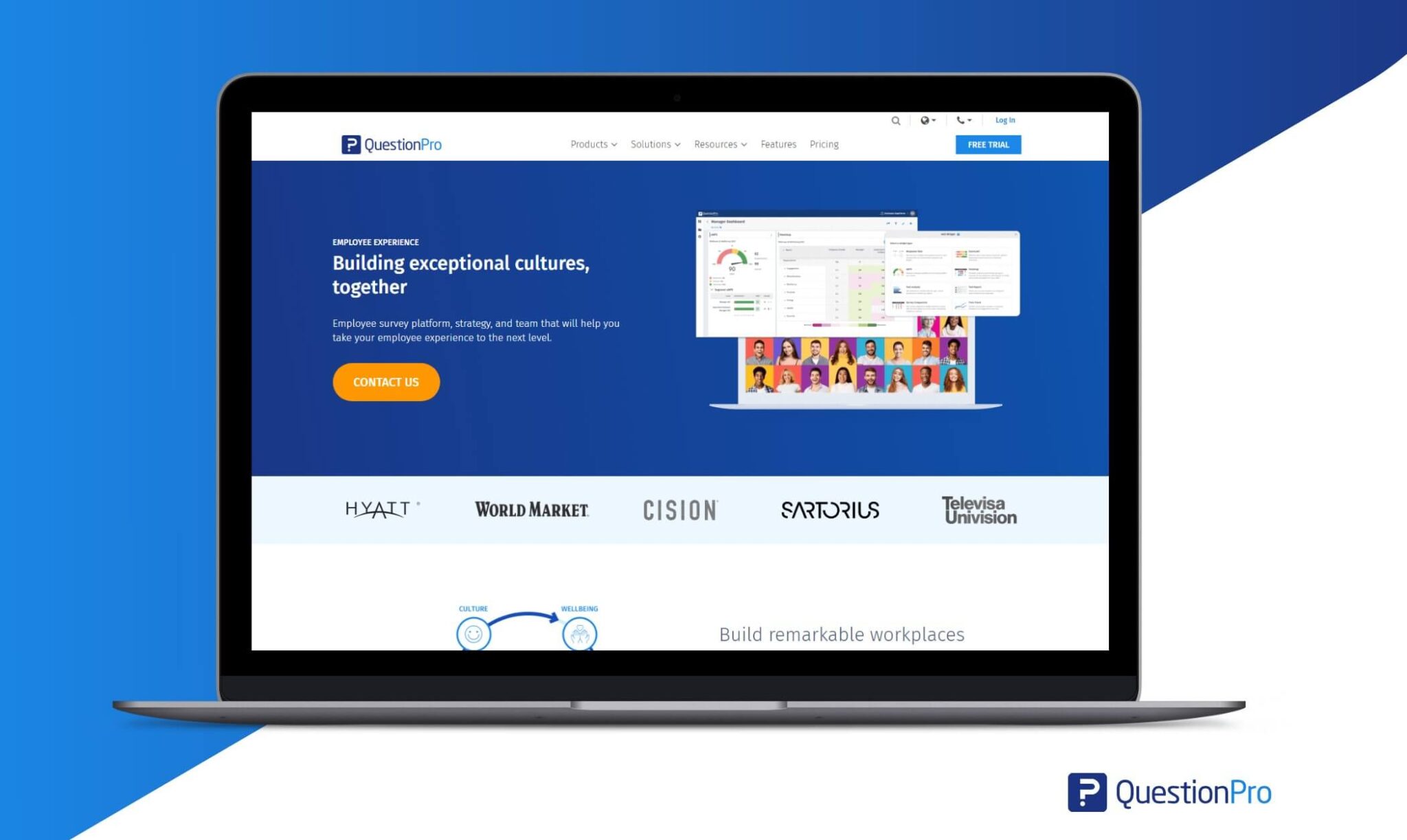
QuestionPro Employee Experience is built around the feedback and listening side of the employee lifecycle. It covers engagement surveys, pulse surveys, onboarding and exit feedback, 360-degree reviews, and lifecycle analytics in one platform.
It is particularly strong for HR teams that want to measure and improve the employee experience at every lifecycle stage rather than just tracking HR administrative tasks.
Key features:
- Employee engagement and pulse surveys
- Onboarding and exit surveys
- 360-degree feedback tools
- Lifecycle analytics dashboard
- Sentiment analysis and trend reporting
- Customizable workflows and templates
Pricing: Free plan available. Advanced plans start at $99/month. Custom pricing available for enterprise.
Best for: HR and people teams that prioritize employee listening, engagement measurement, and lifecycle feedback over administrative HR automation.
2. BambooHR
BambooHR is one of the most widely used HR platforms for small and mid-size businesses in the US. It covers the full employee lifecycle with a clean interface that HR generalists can manage without dedicated IT support.
Its strength is breadth at an accessible price point. It handles hiring, onboarding, time tracking, performance management, and offboarding without requiring multiple integrations to get started.
Key features:
- Applicant tracking and recruitment
- Onboarding and e-signatures
- Performance reviews and goal tracking
- Time-off and attendance management
- HR reporting and analytics
- Offboarding workflows
Pricing: Contact for pricing. Generally considered mid-range for SMBs. Free trial available.
Best for: Small to mid-size US businesses that need a reliable, all-in-one HR platform without enterprise complexity or pricing.
3. Lattice
Lattice started as a performance management tool and has expanded into a broader employee lifecycle platform. Its performance management features remain among the strongest in the market, covering goal setting, continuous feedback, 1-on-1 meeting management, and career development planning.
In 2026, Lattice has grown its engagement and HRIS capabilities, making it a more complete lifecycle option for mid-market companies that place performance and career development at the center of their people strategy.
Key features:
- Performance reviews and OKR tracking
- 1-on-1 meeting tools
- Employee engagement surveys
- Career growth and development planning
- Compensation management
- HRIS with people analytics
Pricing: Starts at $11/person/month for performance management. Full platform pricing available on request.
Best for: Mid-market companies where performance management and career development are the primary people priorities.
4. Rippling
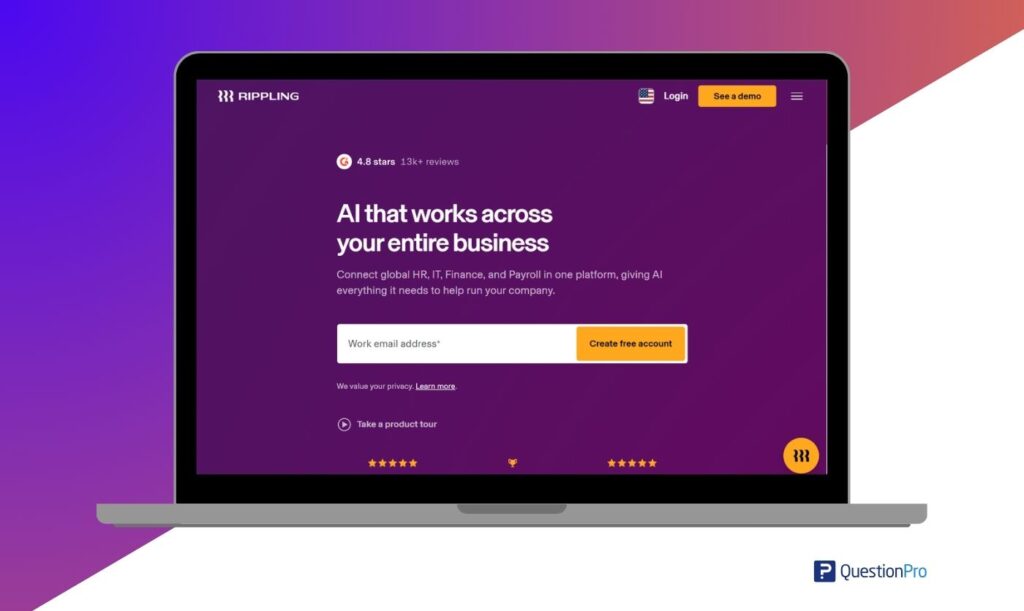
Rippling is one of the most complete workforce management platforms available in 2026. It combines HR, IT, and finance automation in a single system, making it particularly powerful for organizations that want to manage the full employee lifecycle including device provisioning, app access, and payroll alongside traditional HR functions.
Its lifecycle coverage is end-to-end: from offer letter to offboarding, including automated access revocation when an employee leaves.
Key features:
- Full HRIS with employee data management
- Applicant tracking and onboarding automation
- Payroll and benefits administration
- IT device and app management
- Performance management
- Automated offboarding workflows
Pricing: Starts at $8/user/month. Additional modules priced separately.
Best for: Fast-growing companies and tech-forward organizations that want HR, IT, and payroll managed in a single platform.
5. Workday HCM
Workday HCM is the enterprise standard for employee lifecycle management. It covers the full spectrum of HR functions at scale: workforce planning, recruitment, onboarding, learning, performance, compensation, and offboarding, all within a unified system designed for global organizations.
Its analytics capabilities are particularly strong. Workday’s AI-powered insights surface workforce trends, flight risk signals, and skills gaps across large, complex organizations.
Key features:
- Global HR and workforce planning
- Recruitment and talent acquisition
- Learning management system
- Performance and goals management
- Compensation and benefits administration
- AI-powered workforce analytics
Pricing: Contact for pricing. Enterprise-tier, typically significant investment.
Best for: Large enterprise organizations with complex, global workforce management needs and the IT resources to implement and maintain an enterprise platform.
6. Connecteam
Connecteam is built specifically for deskless and frontline workforces. It is mobile-first by design, making it one of the few employee lifecycle platforms that actually works for employees who are never at a desk.
It covers scheduling, communication, task management, onboarding, training, and time tracking, all accessible from a smartphone. For industries like retail, hospitality, construction, and healthcare, it solves problems that desktop-first HR platforms cannot.
Key features:
- Mobile-first employee communication
- Scheduling and shift management
- Onboarding and training modules
- Task management and checklists
- Time tracking and clock-in tools
- Forms and reporting
Pricing: Free plan for up to 10 users. Operations Hub starts at $29/month for the first 30 users.
Best for: Organizations with deskless, frontline, or shift-based workforces who need mobile-first lifecycle management.
7. Quantum Workplace
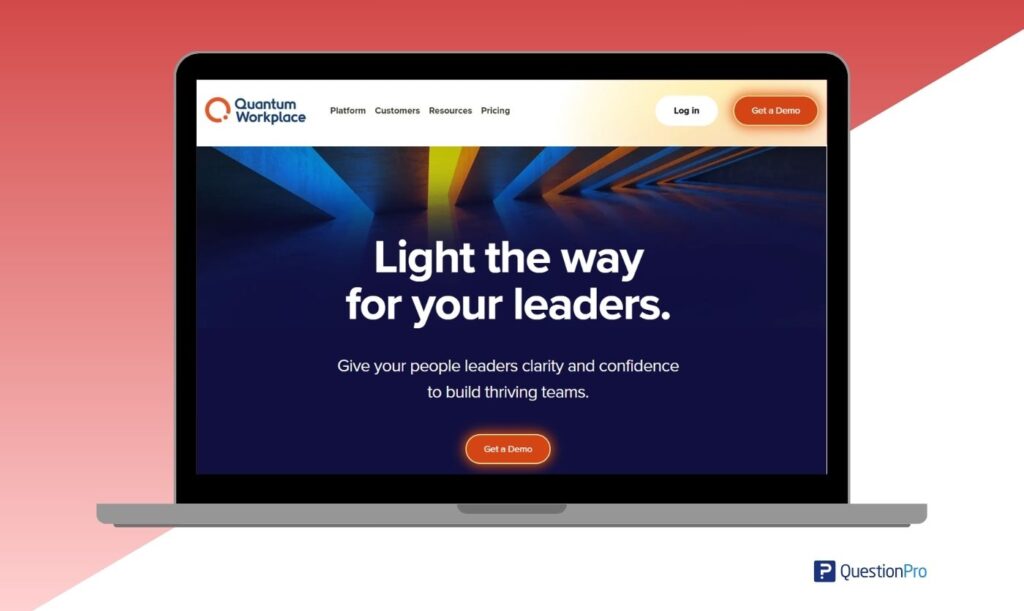
Quantum Workplace combines employee engagement measurement with performance management in a single platform. It is particularly well-suited for organizations that want to connect engagement data with performance outcomes rather than managing them as separate programs.
Its engagement survey tools are strong, and its action planning features help managers turn survey results into visible follow-through, which is one of the most common failure points in engagement programs.
Key features:
- Employee engagement surveys
- Pulse surveys and always-on feedback
- Performance reviews and goal tracking
- Recognition and rewards tools
- Manager action planning
- HR analytics and benchmarking
Pricing: Contact for pricing.
Best for: Mid-market organizations that want engagement and performance managed together with strong manager-level analytics.
Key benefits of employee lifecycle management software
The right platform delivers measurable improvements across HR operations and the employee experience.
- Reduced administrative load: Automated workflows handle onboarding checklists, performance review reminders, and offboarding tasks without manual follow-up.
- Better data quality: A single source of truth for employee data eliminates inconsistencies across spreadsheets and disconnected tools.
- Faster onboarding: Structured digital employee onboarding reduces time to productivity for new hires and ensures nothing gets missed.
- Improved retention: Lifecycle analytics surface engagement trends and flight risk signals before they become employee retention problems.
- Compliance support: Centralized employee records, audit trails, and standardized processes reduce compliance risk.
- Stronger employee experience: Employees get a consistent, well-managed experience at every stage of their journey rather than gaps and friction between systems.
How to choose the right employee lifecycle management software
The right tool depends on your organization’s size, priorities, and existing tech stack. These criteria help narrow it down:
- Coverage vs depth.
Some platforms cover every lifecycle stage at a surface level. Others go deep on one or two stages. Decide which stages matter most for your organization right now, onboarding, performance, engagement, or offboarding, and prioritize depth there over breadth. - Organization size.
BambooHR and Connecteam are built for smaller organizations. Workday and Rippling scale to enterprise complexity. Lattice and Quantum Workplace sit comfortably in the mid-market. - Your biggest HR pain point.
If engagement and retention are the priority, QuestionPro Employee Experience or Quantum Workplace fit better. If performance and career development are the focus, Lattice is the stronger choice. If you need HR, IT, and payroll unified, Rippling is the most complete option. - Integration with existing tools.
Check whether the platform integrates with your current ATS, payroll provider, and communication tools. A platform that does not connect to your existing stack creates more work rather than less. - Mobile access.
For organizations with frontline or deskless workers, mobile experience is non-negotiable. Connecteam is purpose-built for this. Most other platforms on this list are designed primarily for desk-based employees. - Implementation and support.
Enterprise platforms like Workday require significant implementation investment. Mid-market tools like BambooHR and Lattice are designed for faster deployment with less IT involvement.
The right employee lifecycle management platform changes how HR operates
A disconnected HR stack, separate tools for recruiting, onboarding, performance, engagement, and offboarding, creates gaps in data, gaps in the employee experience, and gaps in what HR leaders can actually see and act on.
The platforms on this list address that problem in different ways, for different types of organizations.
The best choice is not the most feature-rich option. It is the one that covers the lifecycle stages most critical to your organization right now, integrates with what you already use, and gives your HR team the visibility to make better people decisions.
For US HR teams evaluating options, most of these platforms offer a free trial or a demo. Test the onboarding experience and the analytics dashboard before committing, as those two areas reveal more about a platform’s real usability than any feature list can.
Frequently Asked Questions (FAQs)
An HRIS (Human Resource Information System) primarily stores and manages employee data and administrative HR functions. Employee lifecycle management software is broader. It covers the full employee journey including engagement, performance, learning, and offboarding, not just data storage and payroll.
BambooHR is the most consistently recommended option for US small and mid-size businesses. It covers the full lifecycle at an accessible price point with a clean interface that HR generalists can manage without dedicated technical support or a long implementation process.
Pricing ranges from free plans (QuestionPro, Connecteam) to $8 to $11 per user per month for mid-market platforms, up to enterprise pricing for Workday and Rippling at scale. Most platforms require a demo or quote for full pricing since costs depend heavily on team size and modules selected.
Yes. Platforms with engagement survey tools and lifecycle analytics can surface retention risk signals before they become departures. Organizations that use lifecycle data to identify disengagement early and act on it consistently report lower voluntary turnover than those relying on annual surveys alone.
Prioritize coverage of the lifecycle stages most critical to your organization, integration with your existing tools, mobile access if you have frontline workers, and the quality of the analytics and reporting. A platform that is difficult to use will not be adopted, regardless of its feature list.